
Foundation
A predictive scientist tries to shorten a coming galactic dark age by seeding a remote colony to preserve knowledge.
First published 2004 · Foundation (Publication Order)
Science FictionClassics
More about this book
Story
In a far-future galaxy-spanning empire, mathematician Hari Seldon develops psychohistory, a system for predicting mass human behavior and the fall of civilizations. His calculations point to an impending collapse and a long dark age, so he arranges for a colony of scientists and scholars to be sent to a remote world at the edge of the galaxy.
The novel follows the Foundation across multiple decades and generations as different leaders face recurring crises. Each section jumps forward in time to a new phase of the colony’s development, with politics, religion, economics, diplomacy, and strategy taking center stage.
Rather than focusing on one continuous protagonist, the story tracks how Seldon’s plan unfolds through separate but linked episodes. As the Foundation tries to preserve knowledge and shape the future, it repeatedly confronts threats to its survival and uses intellect, planning, and social leverage to move civilization toward renewal.
Connected books
Explore all
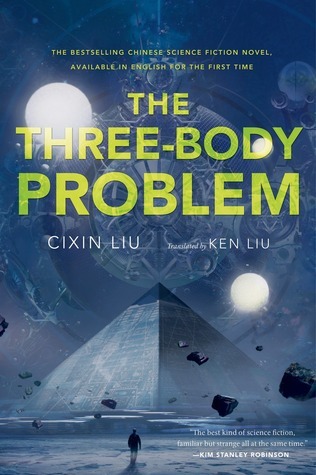




Try another direction
More by Isaac Asimov


In the Foundation (Publication Order) series
Shown by first publication year; this may not be reading order.

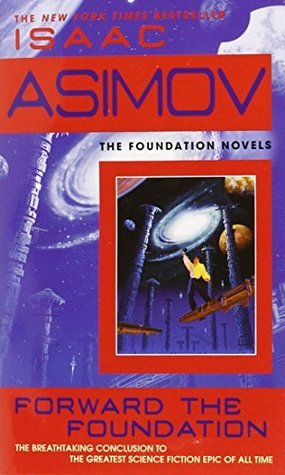


Details
- Authors
- Isaac Asimov
- First published
- 2004
- Genres
- Science Fiction, Classics, Fantasy, Space Opera, Space
- Subjects
- Psychohistory · Open Library Staff Picks · Life on other planets · Fiction · Science Fiction · Long Now Manual for Civilization · Prophecy · Historians · Robots · Fiction, science fiction, general · American literature · American Fantasy fiction · Vie extraterrestre · Romans, nouvelles · Psychohistoire · Psychological fiction · American Science fiction · Hari Seldon (Fictitious character)
- ISBN-13
- 9780553803716
[DEV NOTE: Eventually use our own synthesized data.]